
GEM KNOWLEDGE · LABORATORY NOTES
Lavender Moon Quartz
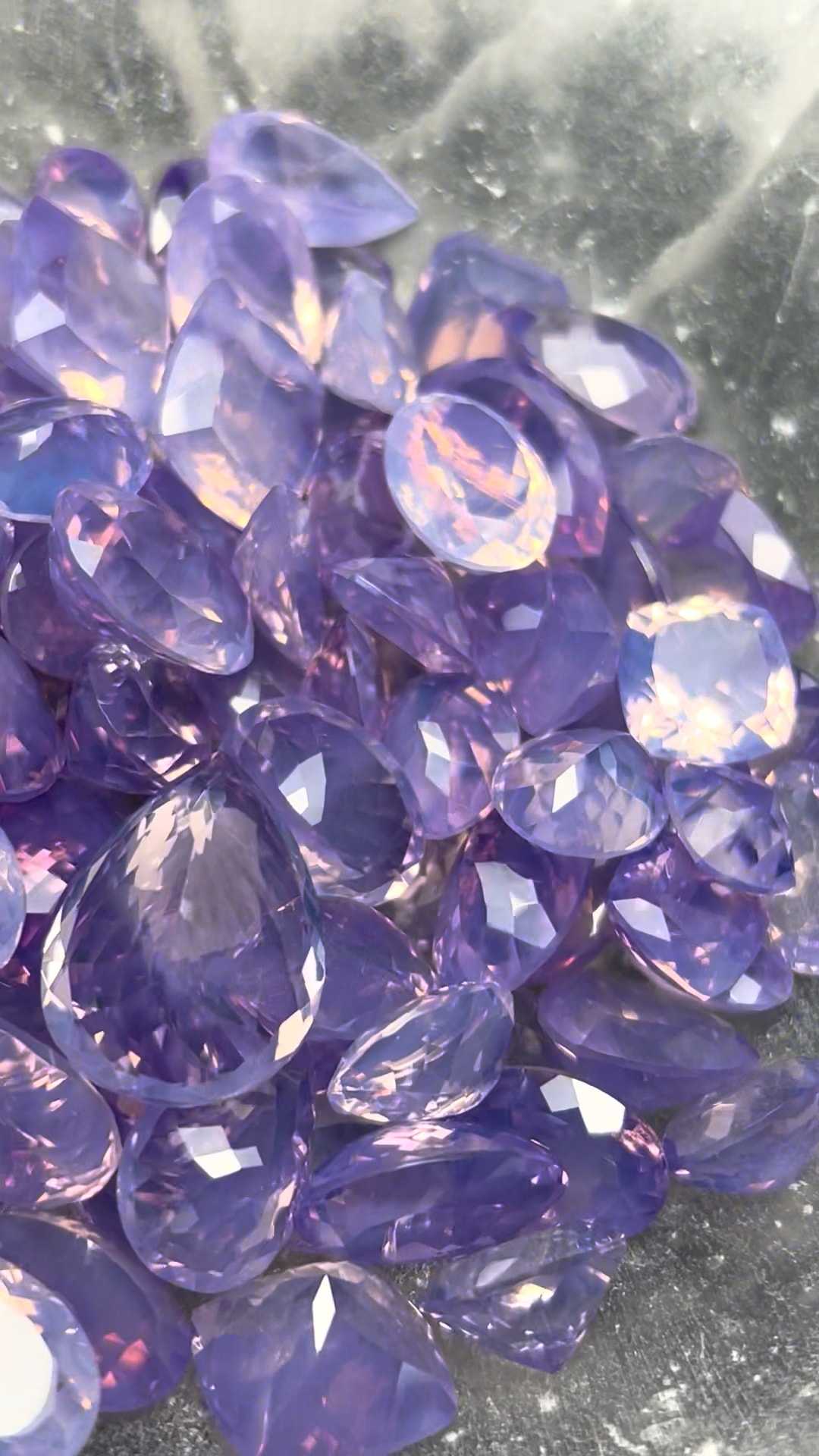
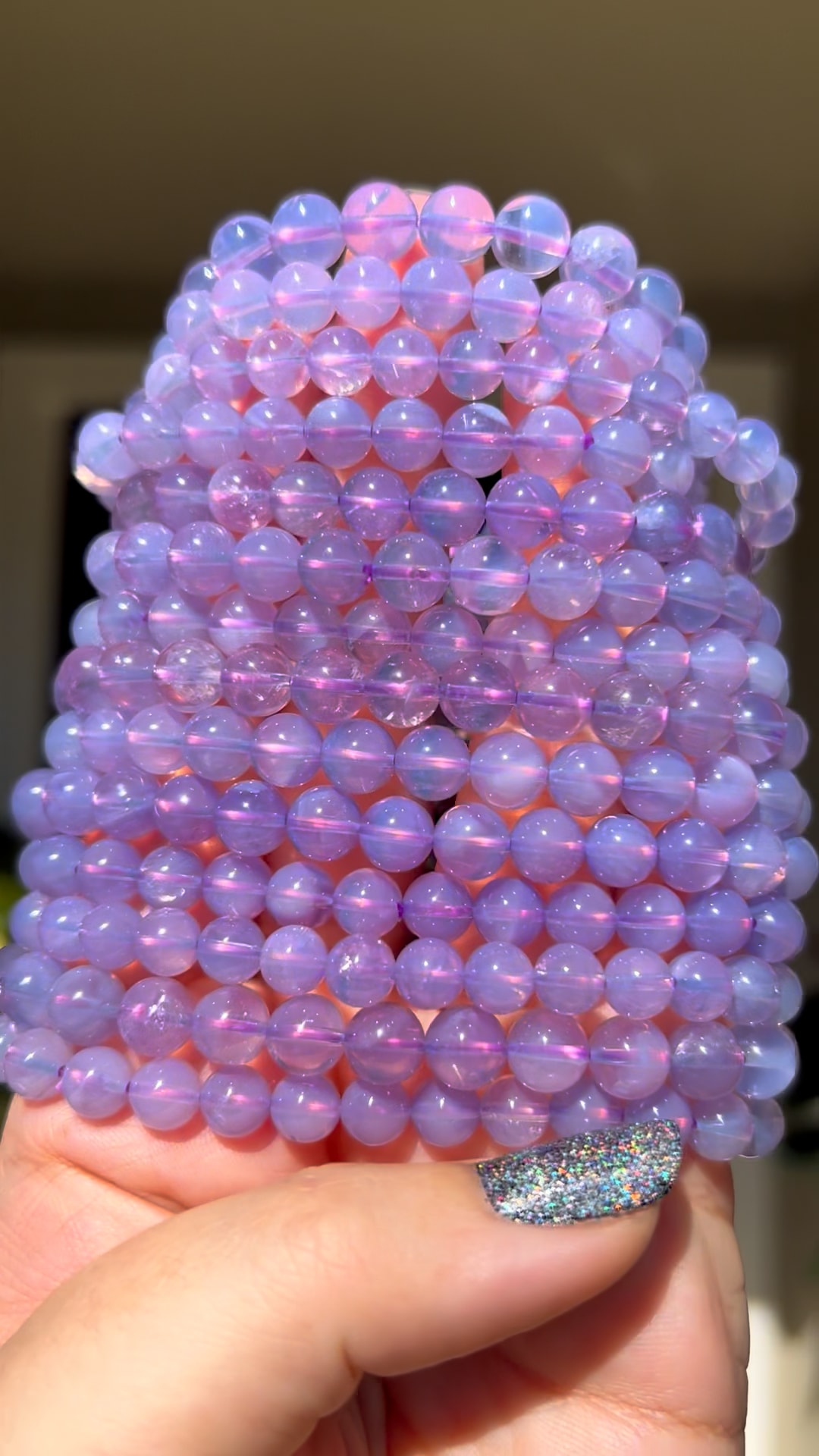
Lavender Moon Quartz is the trade name for this Brazilian material in the Soul Body Gems collection. Its unusual lavender appearance has prompted questions about whether it is genuine quartz.
What the testing found
- The tested faceted specimen is macrocrystalline quartz, ruling out chalcedony.
- Laser-light scattering indicates tiny inclusions contributing to its turbid appearance.
- Aluminum, iron, magnesium, manganese and titanium were detected in minor or trace amounts.
- The analyst proposes a combination of microscopic inclusions and color-related effects involving iron, manganese and titanium, with a possible slight smoky component associated with aluminum and natural radiation.
A natural explanation for an unusual appearance
The report identifies quartz and offers a geological explanation for its appearance. The proposed color mechanisms remain the analyst’s interpretation; the report does not include a separate treatment-status determination.
View the original test results
Sample 10622. Select a page to enlarge it.


These results are the property of Soul Body Gems, Alexander Falster, and the Maine Mineral & Gem Museum. Any mention requires full acknowledgment.
Understanding the report figures
Use this guide alongside the written findings and the original report transcript. It explains the purpose of each analytical figure and preserves the laboratory’s own figure labels. The interpretations apply to the tested specimen; signals alone do not establish the identity of every similar-looking stone.
-
Electron microscope image: This view shows small-scale regions selected for analysis. Its brightness contrast helps distinguish regions with different compositions; it is not a photograph of their natural colors. Numbered spots connect this view to the analyses listed in the report.
Laboratory figure caption: Fig.3: Backscattered electron image of an area of the specimen.
-
Elemental spectrum: The peaks record characteristic X-ray signals from elements in the analyzed spot or area. This is an analysis of that location, not automatically of the entire specimen. Any mineral identification or uncertainty named in the laboratory caption is retained below.
Laboratory figure caption: Fig. 4: Energy dispersive spectrum of spot 1 in Fig. 3 (quartz)
Read the complete report as text
Analytical Result Report
Sample id: 10622 (lavender moon quartz)
Submitted by: Soul Body Gems
Date completed: 9-2-2024
Operating conditions: An AMRAY 1830 SEM operated at 25 kV acceleration potential, 24 mm working distance, 0 degrees sample tilt, coated with 250 Å carbon, and also using the attached XRF unit operated at 30 kV.
Fig. 1: Photograph of the specimen. Approximately 15 mm maximum dimension.
Fig. 2: The specimen in crossed Nichol polarized light (left and middle) and with laser beam passing through.
Fig.3: Backscattered electron image of an area of the specimen.
Fig. 4: Energy dispersive spectrum of spot 1 in Fig. 3 (quartz)
Table 1: Trace elements and minor elements in the specimen, in wt. %
Aluminum
0.22
Iron
0.06
Magnesium
0.16
Manganese
0.04
Titanium
0.03
Summary of findings: This specimen (Fig. 1) is a macrocrystalline piece of quartz (Fig. 2) which rules out chalcedony. A laser beam gets easily scattered (Fig. 2) which indicates tiny inclusions are present. Rose quartz typically has a slightly turbid appearance due to fibrous inclusions. The inclusions are said to be dumortierite, at least in some rose quartz. Dumortierite is an aluminum borosilicate. Other investigators say it is manganese and sometimes titanium that causes the color. Amethyst on the other hand is generally not as turbid as rose quartz and owes its purple color to minor substitution of iron and subsequent effects of natural radiation. It is trivalent iron that gives it the purple color. In this specimen it looks to me that we have some kind of combination that is giving it the properties. Some microscopic inclusions that give it the turbidity and iron, manganese and titanium via intervalence charge transfer reactions give it the specific color. Furthermore, aluminum is also present and it will substitute for silicon. There s a charge imbalance and with natural radiation, the quartz would turn smoky. The older and the longer it is exposed, the darker will the color become. Possible a slight touch of a smoky color adds to the stone.
Date: 9-2-2024 Signature
Read the original laboratory report as text
The following text and tables are transcribed from the original laboratory document. Figure captions identify the report images; the laboratory interpretations and limitations are preserved.
Laboratory report 1
Analytical Result Report
Sample id: 10622 (lavender moon quartz)
Submitted by: Soul Body Gems
Date completed: 9-2-2024
Operating conditions: An AMRAY 1830 SEM operated at 25 kV acceleration potential, 24 mm working distance, 0 degrees sample tilt, coated with 250 Å carbon, and also using the attached XRF unit operated at 30 kV.
Fig. 1: Photograph of the specimen. Approximately 15 mm maximum dimension.
Fig. 2: The specimen in crossed Nichol polarized light (left and middle) and with laser beam passing through.
Fig.3: Backscattered electron image of an area of the specimen.
Fig. 4: Energy dispersive spectrum of spot 1 in Fig. 3 (quartz)
Table 1: Trace elements and minor elements in the specimen, in wt. %
| Element | Reported value |
|---|---|
| Aluminum | 0.22 |
| Iron | 0.06 |
| Magnesium | 0.16 |
| Manganese | 0.04 |
| Titanium | 0.03 |
Summary of findings: This specimen (Fig. 1) is a macrocrystalline piece of quartz (Fig. 2) which rules out chalcedony. A laser beam gets easily scattered (Fig. 2) which indicates tiny inclusions are present. Rose quartz typically has a slightly turbid appearance due to fibrous inclusions. The inclusions are said to be dumortierite, at least in some rose quartz. Dumortierite is an aluminum borosilicate. Other investigators say it is manganese and sometimes titanium that causes the color. Amethyst on the other hand is generally not as turbid as rose quartz and owes its purple color to minor substitution of iron and subsequent effects of natural radiation. It is trivalent iron that gives it the purple color. In this specimen it looks to me that we have some kind of combination that is giving it the properties. Some microscopic inclusions that give it the turbidity and iron, manganese and titanium via intervalence charge transfer reactions give it the specific color. Furthermore, aluminum is also present and it will substitute for silicon. There s a charge imbalance and with natural radiation, the quartz would turn smoky. The older and the longer it is exposed, the darker will the color become. Possible a slight touch of a smoky color adds to the stone.
Date: 9-2-2024 Signature
More from Memory Lane


